
In Partnership With

Forwarded this by a friend? Subscribe here to join the community and never miss out!
It’s Sunday, and today we’re diving into the latest trend: wellness activations.
Wellness activations are everywhere right now, from run clubs and Pilates pop-ups to sauna events and branded recovery mornings. This week, we’re looking at why every brand wants in, what actually makes an activation good, and when “exposure” starts benefiting the organizer more than the brands helping create the experience.
This week, we’re looking at how recovery became another thing to optimize, which tools are actually worth using, and where the evidence is much narrower than the marketing.
TL;DR
Wellness activations work when they add something useful to an existing community. The problem is that the market is getting crowded, and smaller brands are increasingly being asked to provide free product, labor, or sponsorship in exchange for vague “exposure” while organizers keep most of the upside and no real measurable metrics on success and ROI.
The Problem With the Wellness Pop-Up Boom

Brand activations used to be fairly predictable: a launch party, a press dinner, maybe a temporary store designed largely around getting photographed. Now, a brand launch is just as likely to involve a Saturday morning run, a Pilates class, a recovery lounge, or an afternoon built around sauna, cold plunge, coffee, and some very strategically placed products.
The shift makes sense because wellness gives brands something conventional advertising increasingly struggles to create. People do not simply see the brand. They spend time with it, use the product in context, meet other people, and potentially associate the company with an experience they actually enjoyed.
Running has become one of the clearest examples. Marketing Brew reported ahead of this year’s New York City Marathon that run-club partnerships have quickly become close to table stakes for marketers hoping to enter the running conversation. Roughly 52.3 million Americans participated in road running in 2025, according to Outdoor Industry Association data cited by the publication, and nearly 30% of the brands appearing in running content on TikTok this year were outside the fitness industry. Beauty and personal care were among the fastest-growing categories entering the space.
That last part tells you almost everything about where wellness culture is heading. A run club is no longer just a running audience. It sits somewhere between fitness, social life, fashion, beauty, food, dating, travel, and community, which makes it an unusually attractive place to reach Gen Z and millennial consumers without making the experience feel like traditional advertising.
Marathon weekend became wellness fashion week
The New York City Marathon may be the most obvious example of how competitive this has become. Around 60,000 runners and an estimated two million spectators were expected this year, but the cultural moment extended far beyond race day. Glossy documented a week filled with shakeout runs, dinners, parties, pop-ups, and recovery events from Nike, Adidas, New Balance, On, Puma, Saucony, Hoka, H&M, Vuori, and others.
H&M paired a pre-marathon run with sauna and red-light therapy. Nike hosted a women’s run alongside a live podcast recording. Saucony created its deliberately unserious “Jorts Mile.”
Salomon worked with Manhattan social club Moss on a member shakeout run. The point was rarely to close a sale in the room. It was to be present while people were already emotionally invested in one of the biggest running moments of the year.
That is where experiential wellness makes the most sense. The brand joins the ritual rather than trying to create one from scratch.
The best activations feel obvious in hindsight
Lululemon’s collaboration with KARVE in London is a good example. The partnership combined a community run, a KARVE class, and a branded café experience with smoothies and food built around the event. The fit is so natural that nobody needs to be convinced why the two brands are sharing a room.
KARVE has turned this type of collaboration into a business of its own, hosting activations for brands including L’Oréal, Vichy, Charlotte Tilbury, TALA, Jacuzzi, and others. Its current London offering explicitly includes product launches, sampling, influencer events, wellness partnerships, and complete studio takeovers, starting at £525 per hour with a two-hour minimum.
It is effectively a ready-made audience, venue, and content environment for brands that want to enter wellness without building the infrastructure themselves. KARVE lays out the model directly on its brand-events platform.
There is nothing inherently wrong with that. In fact, when the brand, audience, venue, and experience align, it can be one of the smartest forms of marketing. The experience is useful before it becomes promotional, and that distinction tends to separate the activations people actually remember from the ones they attended for the gift bag.
Even the strange partnerships can work
A wellness activation does not have to make perfect sense on paper. Sometimes knowing that the combination is slightly ridiculous is exactly why it works.
During the Dublin Marathon, Burger King partnered with Saunos Dublin on a post-race sauna and cold-plunge experience, with cold plunges styled like oversized Burger King drink cups. A fast-food company entering recovery culture could have felt painfully forced, but the concept worked because Burger King did not suddenly pretend to be a longevity company. It offered runners something relevant to the day and allowed the joke to be part of the experience.
That is a surprisingly important distinction. Brands do not necessarily need wellness credentials. They need enough self-awareness to understand what role they are playing.
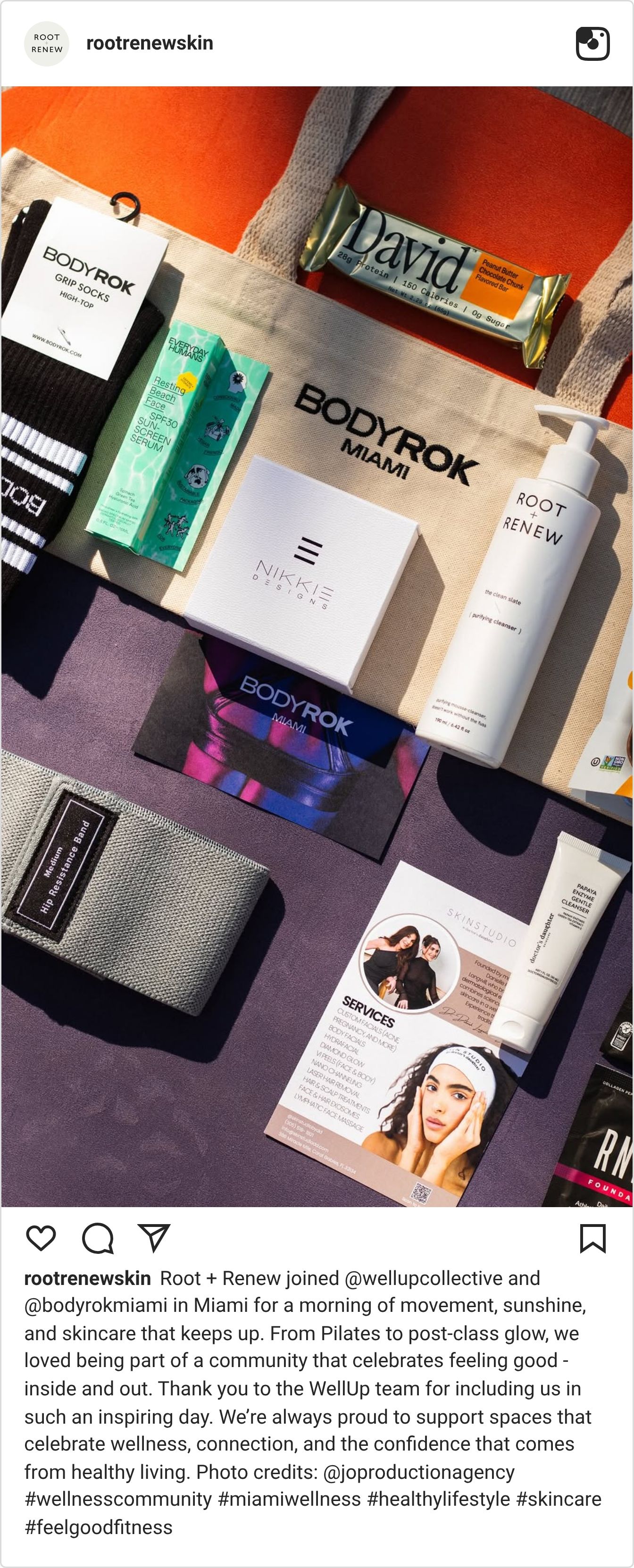
Then there is the wellness pop-up problem
The bigger concern is what happens when every city starts filling up with smaller wellness activations built around essentially the same formula: movement class, refreshments, a panel or mini workshop, and a table of products supplied by local or emerging brands.
On the consumer side, the experience starts to blur. When every weekend has another “wellness morning,” another Pilates-and-matcha event, another run-and-recovery concept, and another vaguely defined community gathering, the novelty disappears.
The market becomes crowded not because people stopped caring about wellness, but because too many events are selling slightly different versions of the same afternoon, with the same brands.
When “Community” Becomes a Marketing Plan
For smaller brands, the economics can be even less appealing.
The pitch often sounds attractive: contribute products for the gift bags, provide samples, give attendees an exclusive discount, maybe send someone from the team to be present, and in return the brand receives “exposure” to a desirable wellness audience.
Sometimes that can absolutely be worthwhile. But exposure is not automatically compensation, and it certainly is not automatically a win-win.
If the organizer sells the tickets, owns the attendee relationship, collects the email addresses, produces the event content, secures sponsor fees, and benefits from the credibility of having recognizable brands involved, while a smaller company provides inventory and labor for free, the value exchange starts looking very different.
The organizer has several ways to measure the return. The participating brand may leave with a few tagged Instagram Stories and no meaningful way to know whether the event generated customers at all.
That is where wellness activation culture can become extractive. Small brands are often the ones least able to absorb the cost of hundreds of gifted units, yet “exposure” is frequently presented as though the opportunity itself should be enough.
Meanwhile, those same products help justify a higher ticket price, fill a gift bag, make the event look better in photographs, and increase the perceived value of the organizer’s experience.
The problem is not that organizers should not make money. Building an event requires real work, production, venue costs, staff, marketing, and risk. The issue is pretending everyone involved is benefiting equally when the commercial upside is clearly concentrated in one place.
A genuine partnership should be able to answer basic questions. How many people are attending? Who are they? What does the brand actually receive? Is there category exclusivity? Will attendee data or opt-ins be shared where legally appropriate? Is there guaranteed content? Will the product be meaningfully integrated or simply dropped into a bag with fifteen others? Is the organizer contributing anything to the cost of goods?
If those answers are vague, “brand exposure” starts sounding less like marketing strategy and more like free inventory.
Community is not a backdrop
This same problem shows up when brands treat run clubs, Pilates studios, and wellness communities as scenery for content rather than groups of people with their own identity.
AT&T took a more thoughtful route when it partnered with Seattle Storm guard Natisha Hiedeman and the Run Budz community she had already built. Instead of inventing a branded run club, the company supported an existing one. Around 300 people attended, and according to AT&T, the resulting content generated an engagement rate above 9%.
The brand’s own team told Marketing Brew that the goal was to find places where people were already connecting and add value rather than manufacture a community from scratch.
That feels increasingly like the better model. You do not always need to launch another club. Sometimes the most credible thing a brand can do is support the people who already created one.
Wellness is becoming an IRL media channel
There is a reason this trend is not going away. A run club has an audience. A Pilates studio has an audience. A recovery space has an audience. A marathon has an enormous audience. Brands are beginning to treat those communities almost like media properties that can be sponsored, programmed, and collaborated with.
The difference is that this media audience is physically present. People remember the class, the person they met, the coffee afterward, or the product they tried. When an activation works, the brand becomes part of an actual memory rather than another impression in a feed.
The economics can also scale far beyond a local pop-up. Fast Company recently highlighted Diplo’s Run Club, which has expanded across U.S. cities and combines a 5K with a post-run dance event. Tickets range from about $65 to nearly $250, with brands including Hyperice and Altra integrated into the experience. Some events have drawn more than 10,000 runners. At that scale, wellness activation is no longer simply a marketing tactic. It is the product.
The Activations We Actually Trust
The activation formats that still feel strongest are usually the simplest because the value is obvious.
Supporting an existing community is almost always more interesting than creating a temporary branded one. A partnership with a credible run club, instructor, or studio allows a brand to contribute without pretending it invented the culture.
Useful race-week programming also makes sense. Shakeout runs, gear support, hydration, recovery, and spaces where runners can meet before or after an event are solving something that already exists rather than inventing another reason to attend.
Thoughtful product trial can be incredibly effective when the setting actually helps someone understand the product. A sunscreen at an outdoor run, recovery product after a race, or skincare product in a relevant beauty-and-movement event feels different from a random sample placed in a gift bag.
Small events with genuinely good programming still have a place too. Not every activation needs 500 guests or a celebrity instructor. A smaller event can be more valuable when the attendee profile is right, the brands are carefully selected, and nobody is being asked to subsidize the entire experience in return for an Instagram tag.
The common thread is usefulness. The activation should still have a reason to exist if nobody posted it.
The Bum Line
Wellness has become one of the most valuable places for brands to show up because people are not simply consuming it. They are participating in it, and participation creates the kind of attention that is increasingly difficult to buy online.
But there is a difference between joining a community and monetizing its aesthetic. The best activations give people something they would genuinely want to do, give participating brands a clear reason to be there, and respect the communities that made the moment culturally relevant in the first place.
The weaker version is becoming easier to spot: another class, another tote bag, another row of gifted products, and another promise that everyone involved will benefit from the exposure.
Maybe they will. But if the organizer gets the ticket revenue, the attendee list, the content, the sponsor value, and the brand credibility while everyone else supplies the experience, we should probably stop calling that a win-win.
Your Mind Called. It Wants Less Drama.

If you have trouble meditating, sleeping or feeling anxious then you should try Muse. Unlike other meditation tools, Muse actually responds to you! It uses your own brain signals to train your mind to meditate better, be more focused and have more restful sleep. Check it out, you can also save 20% off with this link: https://choosemuse.com/wellnessbum
The wellness activation boom is not going away, and some of the best brand experiences of the next few years will probably come from this space. People want to do things together again, and brands understandably want to be part of that.
The opportunity now is to make those experiences better rather than simply make more of them.
Because at some point, we do not need another wellness pop-up. We need one worth leaving the house for. Ironically, that’s what we are creating with Wellness Bum. A way for you to discover these different wellness events that are actually worth it.
We’ll be back Wednesday with The IRL Edit, looking at the activations, events, and wellness concepts actually worth knowing about.
See you Wednesday.
Valerie