
Sponsored by

Forwarded this by a friend? Subscribe here to join the community and never miss out!
Somewhere along the way, the weekend stopped being a break and started being a backlog. A list of things you didn't get to during the week, repackaged as self-care and scheduled into two-hour blocks. This week we're giving that back. All of it.
The Weekend Reset Nobody Is Talking About

The case for doing nothing on the weekend. Actually.
At some point in the last five years, the wellness industry quietly colonized the one part of the week that used to belong entirely to you.
Saturdays we are doing the most for our social lives. Catching up with friends, family, doing things we can’t do during the week. Sunday mornings used to just happen. Now they have a structure. A workout you planned, a meal prep session, a journaling prompt, a walk that counts toward your step goal, a podcast that is technically educational, a skincare routine that has seven steps, a hair mask, and a sheet mask at the end. All of it framed as a Sunday reset and rest. None of it actually restful.
This is not a coincidence. Unstructured time is the one thing the wellness industry cannot monetize. The moment you are genuinely, productively doing nothing, you are not consuming content, you are not buying a product, and you are not performing a routine. You are simply existing. And that, apparently, is a gap in the market.
The productivity creep that rebranded itself as self-care
There is a version of self-care that is genuinely restorative. And there is a version that is just optimization with better aesthetics and a more forgiving font.
The second version looks like this: a Saturday morning that begins with a recovery score check, moves into a structured workout, transitions into a 90-minute meal prep session documented for content, includes an afternoon walk with a podcast about biohacking, and ends with a wind-down routine that takes longer than most people's lunch breaks.
None of that is wrong, exactly. But none of it is rest. It is performance with the volume turned down, and the body knows the difference even when the brain doesn't.
The clinical term for what actually restores cognitive function and emotional regulation is not self-care. It is psychological detachment. The complete disengagement from work-related and goal-directed thinking. Research from occupational psychologist Sabine Sonnentag, who has spent decades studying recovery from work, consistently shows that the degree to which people mentally detach during off-hours is one of the strongest predictors of wellbeing, energy, and performance the following week.
Not the quality of their workout. Not the cleanliness of their meal prep. The degree to which they actually stopped.
What the wellness industry gets wrong about rest
The problem with the optimized weekend is not that any individual activity is bad. Cold plunges, long walks, cooking real food, moving your body: all genuinely good things. The problem is the orientation. When rest becomes a project with outcomes, it stops functioning as rest.
Psychologically, the brain does not distinguish between productive stress and enjoyable stress. Goal-directed activity, even activity you chose freely and enjoy, still requires the prefrontal cortex to stay engaged, still keeps the task-completion circuitry running, still maintains a low-level performance state. You are doing less. You are not recovering.
Recovery, actual recovery, requires the brain to go offline from goal-directed thinking entirely. Boredom does this. Wandering does this. Watching something you would be embarrassed to tell your therapist about does this. Lying on the floor doing nothing in particular does this. These are not guilty pleasures or wastes of time. They are neurologically necessary.
There is also a compounding irony here. The anxiety about whether you are resting correctly is itself a barrier to rest. If you are lying on the sofa wondering whether this counts, it does not count. The meta-monitoring is the problem.
The permission slip the wellness internet will not give you
You are allowed to have a Saturday that produces nothing.
You are allowed to cancel the workout if you do not feel like going. You are allowed to leave the meal prep until Sunday, or not do it at all, and order something instead. You are allowed to watch three episodes of something that has no educational value. You are allowed to take a nap that does not end at a sleep-cycle-optimized interval. You are allowed to spend two hours doing something that is purely, pointlessly enjoyable with no content potential whatsoever.
None of this is falling behind. None of this is laziness. None of this requires a recovery score to justify.
The research on restoration is actually quite clear on what works. Activities that are low demand, intrinsically motivated, and free from performance pressure restore cognitive resources fastest. The specific activity matters less than the orientation. Gardening, reading something frivolous, wandering around a neighborhood you have never been to, sitting in a cafe without your phone out: all of these work. They work because they ask nothing of you.
The wellness industry has a financial interest in telling you that rest requires a product, a protocol, or at minimum a structured approach. It mostly does not. It requires stopping, and the willingness to let that be enough.
How to actually rest on a weekend
No framework. No five-step approach. Three things, loosely held.
Leave at least one block of time with no plan and no outcome. Not a walk with a destination. Not a podcast. Just unallocated time that you are allowed to fill with whatever feels right in the moment, including nothing.
Do at least one thing this weekend that you would do even if no one would ever know about it and it produced zero content. The things that pass that test tend to be the ones that actually restore you.
Notice when you are reaching for your phone to fill a gap that does not need filling. Boredom is not a problem to solve. It is the sensation of your brain beginning to decompress. Let it.
THE BOTTOM LINE
The most radical wellness practice in 2026 is having a weekend that looks like nothing on paper and feels like everything in your body.
You do not need to optimize your rest. You need to actually take it.
That is it. That is the whole thing.
10K Steps Is a Myth–Try This Instead

When motivation is lacking, jumping into heavy routines is the fastest way to burn out. That’s why millions of people are turning to walking as the foundation of their fitness journey.
Walking lets you enjoy the outdoors, clear your head, and practice mindfulness. It’s simple, sustainable, and can support lasting weight loss if you know how much you need. The “10,000 steps a day” rule is outdated; everyone’s lifestyle is different.
With Simple, you’ll get access to habit-based coaching that’s helped users lose over 18 million pounds. Take the quiz to discover your personalized walking target.
THE REWIND
Five things and tools worth your attention this week
📖 Read — Sabine Sonnentag's research on psychological detachment is the academic backbone of everything in this issue. If you want to go deeper on the science of actually switching off, her work is the place to start. Search her name and "recovery from work" and prepare to feel very validated.
🎙️ Listen — Find something to listen to this weekend that has zero educational value. A true crime podcast. A comedy show. Something your brain can follow without taking notes. Personally, a big fan of Giggly Squad, Two Hot Takes, and Good Hang with Amy Poehler. That is the assignment.
😴 Sleep — Hatch Restore is still the most considered alarm clock on the market. Sunrise simulation, sleep sounds, and a wind-down routine that actually works without waking up to a blaring alarm or snoozing a few times.
🛋️ Do — Leave one two-hour block this weekend completely unplanned. No outcome, no product, no content. Report back on how uncomfortable the first 20 minutes feel and how different the last 20 feel.
🌀 Watch — The next time you reach for your phone out of boredom, wait 90 seconds first. Just sit with it. This is not a mindfulness exercise. It is a data collection exercise about how often you are filling space that did not need filling.
📊 Track smarter — WHOOP just announced it's moving into clinical care. Live clinician consultations inside the app launching this summer, with EHR syncing and months of continuous biometric data informing every conversation. If you're going to track, this is where the category is headed. Get a free WHOOP and one month free when you join with my link.
✏️ Notice — How many of your weekend plans this week are genuinely chosen vs. feel like they should be on the list. You do not have to change anything. Just notice.
WEEKLY THOUGHT
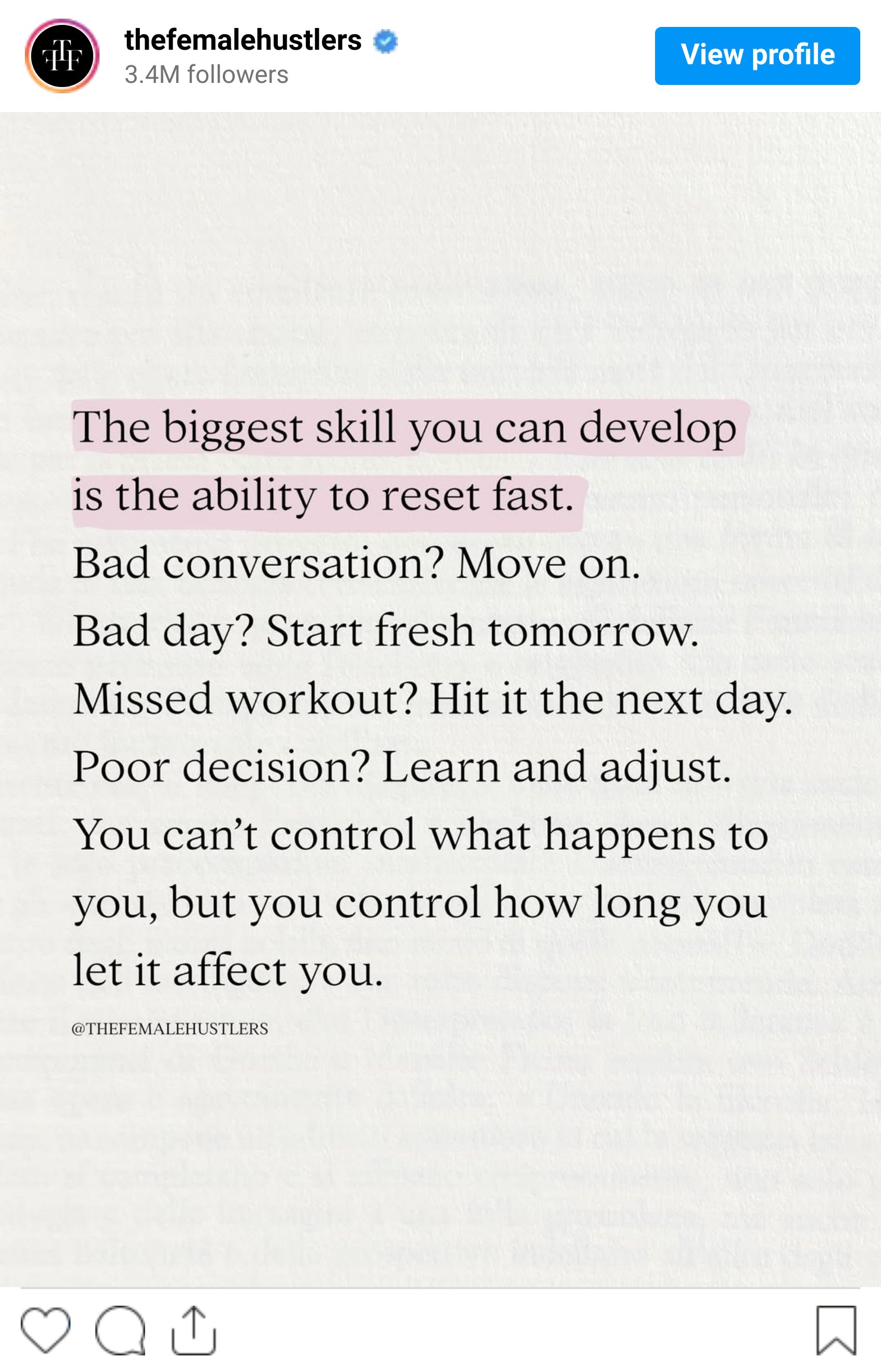
A MOMENT TO REFLECT
Doing nothing is not the opposite of wellness. It is, for a lot of people, the most wellness thing they could actually do right now.
See you Wednesday!
Valerie
