
In partnership with

Forwarded this by a friend? Subscribe here to join the community and never miss out!
The routine content is everywhere right now and honestly it is not wrong. Six routines, consistently done, is one of the highest-leverage things you can build for how you feel day to day.
The problem is not the concept. It is that most people build one routine, call it self-care, and wonder why nothing else feels stable. This week we are doing the full edit. All six, what each one actually does, and what makes them work versus what makes them fall apart.
The 6 Routines That Change Everything

The 6 routines worth actually building. An honest verdict on each.
The wellness internet loves a routine. Morning routines, night routines, Sunday resets, CEO mornings. The content performs because the desire is real: people want structure that feels good rather than structure that feels like a second job.
You do not need one routine. You need six. And each one covers a different surface area of your life that the others cannot reach.
Here is the honest edit on all six.
1. A Morning Routine
The verdict: worth building, but shorter than you think.
The morning routine industrial complex has produced some genuinely absurd content. Ninety-minute mornings. Seventeen steps before coffee. Cold plunges at 5am followed by journaling, meditation, a walk, red light therapy, and a protein-dense breakfast that requires actual cooking.
The research on morning routines is straightforward: what matters is not the length or the content but the consistency and the absence of the phone in the first 20 minutes. Morning light before your screen, a few minutes of silence or stillness, writing down three non-negotiables for the day. That is the functional core. Everything else is optional.
The non-negotiables framing is genuinely useful. Not a to-do list. Three things that, if done, mean the day was a success regardless of what else happened. It is a clarity tool disguised as a productivity tool.
What makes it work: keeping it under 30 minutes so it survives the days when you wake up late, tired, or both.
What makes it fail: optimizing it to the point where any deviation feels like the whole thing is ruined.
2. A Sleep Routine
The verdict: the most underbuilt routine in most people's lives and the one with the highest return.
Everything about how you feel in the morning is downstream of this. And most people have a morning routine and no sleep routine, which is roughly equivalent to having an elaborate skincare routine and sleeping in your makeup.
The functional core: a hard stop on work with everything closed and out of sight, no screens in the 30 minutes before sleep, a skincare routine that doubles as a wind-down signal, and something that requires no decisions, a book, a journal, something that lets the brain decelerate.
The neuroscience here is clean. Your brain needs a consistent wind-down sequence to begin melatonin production reliably. The sequence matters less than the consistency. The same things, in the same order, at roughly the same time, signals to your nervous system that sleep is coming. It works the same way Pavlov's bell worked, except the outcome is actually useful.
What makes it work: treating it as a non-negotiable boundary rather than something that happens when you finally stop working.
What makes it fail: the "I'll just finish this one thing" that moves bedtime by 45 minutes four nights in a row.
3. A Self-Care Routine
The verdict: the most misunderstood routine on this list.
Self-care content has been so thoroughly colonised by product marketing that it is easy to forget what it is actually for. It is not a sheet mask and a bath bomb. It is solo time with zero agenda. Movement you actually enjoy rather than movement you feel obligated to complete. A bath or shower that exists purely to reset rather than to be efficient.
The functional core is psychological detachment, the same concept from our weekend issue. At least one block of time per week with no outcome, no content potential, and no one else's needs attached to it. Skin routine without rushing is on the list not because the products matter but because the slowing down does.
The distinction worth making: self-care is not reward-based. It is not something you earn after a productive week. It is maintenance, the same way sleep is maintenance. It does not require justification.
What makes it work: protecting it from being the first thing cancelled when the week gets busy, which it will.
What makes it fail: filling it with productive-adjacent activities and calling it rest.
4. A Movement Routine
The verdict: the only variable that matters is whether you would do it even when you do not feel like it.
The movement routine content almost always shows someone doing something aspirational. A reformer class, a run at golden hour, a weight session with perfect form. What it rarely shows is the Tuesday at 6pm when you are tired and the last thing you want is to go anywhere.
That Tuesday is the routine. Everything else is just exercise you were going to do anyway.
The functional core is finding movement that clears your head rather than adds to your mental load. Movement you actually enjoy is not a luxury. It is the difference between a routine that lasts three weeks and one that becomes a non-negotiable part of how you function.
What makes it work: consistency over intensity, every time. Three sessions a week you actually do beats five sessions a week you negotiate with yourself about constantly.
What makes it fail: choosing movement based on what you think you should be doing rather than what you will actually show up for.
5. A Money Routine
The verdict: the routine nobody talks about in wellness spaces and the one that affects your nervous system more than almost anything else.
Financial anxiety is one of the most consistent background stressors in most people's lives and it is almost entirely driven by avoidance. Not looking. Not knowing. The money routine is not about becoming a finance person. It is about removing the anxiety that comes from not knowing where you stand.
The functional core: reviewing income and expenses weekly, even briefly. Paying yourself first before the money has somewhere else to go. Checking what is working in your income picture and making one forward-facing decision per week, not per quarter, per week.
The weekly review does something specific. It converts financial anxiety, which is vague and pervasive, into financial awareness, which is specific and manageable. You cannot solve a feeling. You can solve a number.
What makes it work: making it a fixed weekly appointment rather than something you do when you feel motivated to face it.
What makes it fail: waiting until you feel ready, which is a feeling that never arrives on its own.
6. A Sunday Routine
The verdict: the routine that makes all the others easier.
The Sunday routine is the infrastructure. It is not a separate routine so much as the weekly reset that keeps the other five from falling apart under the pressure of an unplanned week.
The functional core: a weekly review that looks backward at wins and forward at the week ahead, a content or planning block if you work for yourself, a batch cook or meal prep that removes one decision per day, and a long walk with no phone and no agenda. The last one is not optional. It is the thing that separates a productive Sunday from a stressful one.
The planning component is worth taking seriously. People who plan their week on Sunday do not have better weeks because they are more organised. They have better weeks because they have already made the decisions. Fewer decisions in real time means less decision fatigue, which means more of yourself available for the things that actually matter.
What makes it work: keeping it enjoyable enough that you look forward to it rather than treating it as a second Monday.
What makes it fail: over-structuring it to the point where Sunday feels like work with a different aesthetic.
THE BOTTOM LINE
Six routines is not a lot. It is a morning, a night, a self-care window, a movement practice, a money check-in, and a Sunday reset. Most of them overlap. All of them compound.
The reason routine content keeps performing is that people are not looking for a hack. They are looking for a structure that makes life feel less like it is happening to them and more like something they are participating in.
These six, done consistently and without perfection, do exactly that.
OUR SPONSOR
Smart starts here.

You don't have to read everything — just the right thing. 1440's daily newsletter distills the day's biggest stories from 100+ sources into one quick, 5-minute read. It's the fastest way to stay sharp, sound informed, and actually understand what's happening in the world. Join 4.5 million readers who start their day the smart way.
THE REWIND
Five things and tools worth your attention this week
💪 Recover — If you are building a movement routine and not tracking how your body is responding to it, you are missing the most useful data point. WHOOP’s strain and recovery breakdown tells you not just how hard you worked but whether your body is ready to do it again. The difference between training and overtraining is in the data. Get a free WHOOP and one month free when you join with my link.
🥛 Support — ARMRA Colostrum is the one addition worth making to any routine stack right now. Gut barrier support, immune function, and a growing body of clinical research that holds up under scrutiny. One thing, consistently. Enjoy 20% off new and returning customers when you shop my link or use code WELLNESSBUM at checkout.
📖 Read — Atomic Habits by James Clear remains the most practically useful book written on why routines stick and why they fall apart. If you are building any of the six this week, chapter two alone is worth the read.
🛋️ Try — Pick the one routine from this list that you have been meaning to build and have not. Set a 14-day window. Not forever. Just 14 days. Notice what changes.
🎙️ Listen — The Huberman Lab episode on habit formation remains one of the most evidence-dense breakdowns of how routines actually get encoded neurologically. Worth a listen if you want the science behind why the Sunday routine makes the other five easier.
WEEKLY THOUGHT
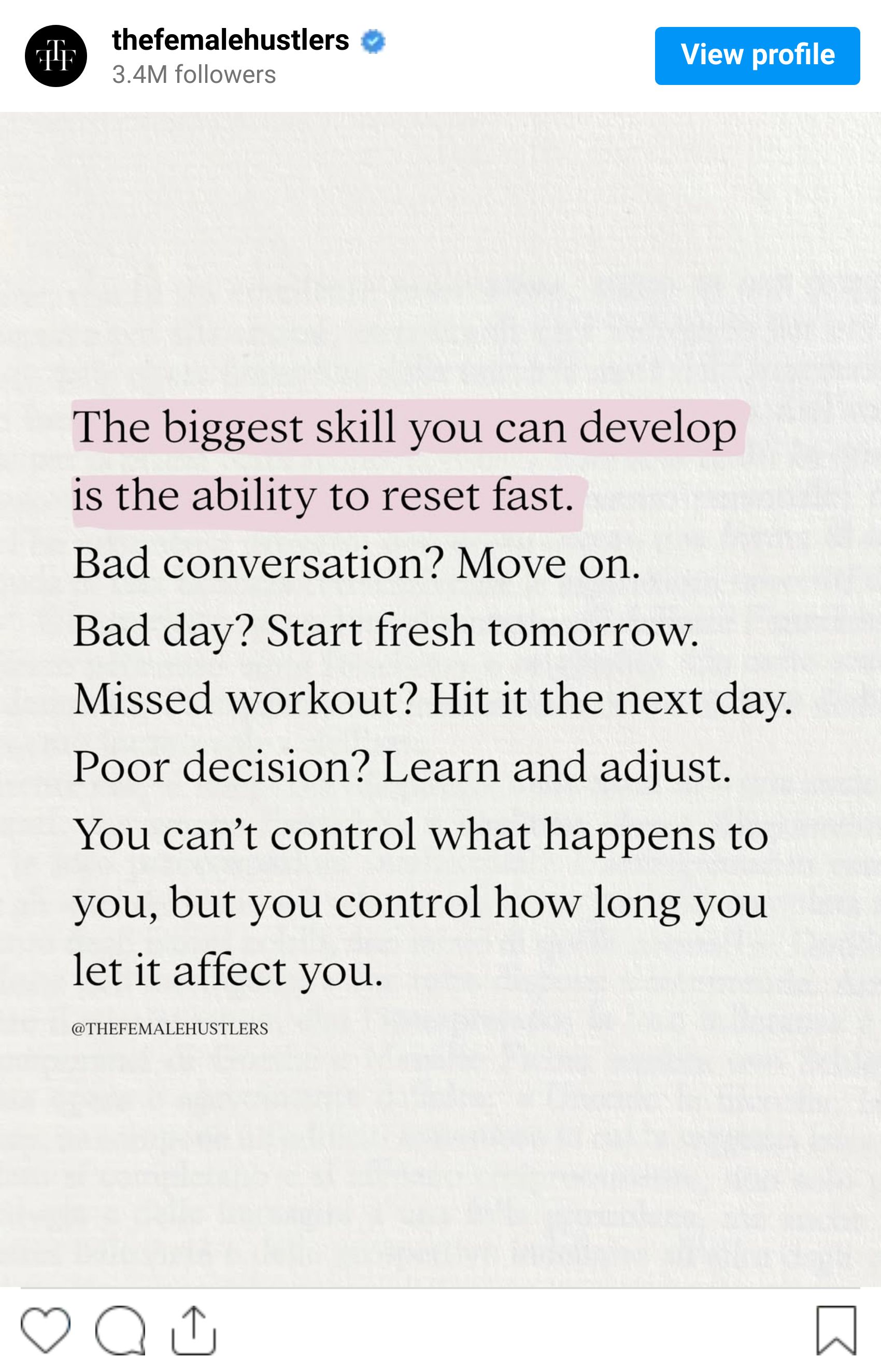
A MOMENT TO REFLECT
Six routines. Not seventeen supplements, not a 90-minute morning, not a perfect week.
Just six structures that show up consistently and make the rest of your life easier to live. That is actually it.
See you Wednesday.
Valerie
