Forwarded this by a friend? Subscribe here to join the community and never miss out!
The sleep tech industry just had one of its biggest news weeks in recent memory. New wearables, clinical upgrades, pregnancy modes, a $99 screenless tracker from Google. The optimization machine is running hot.
So naturally, this week we're making the case for doing less of it.
Not because the tech is bad. Some of it is genuinely useful. But there's a version of sleep tracking that has quietly become its own source of anxiety — and that's worth talking about honestly.
Let's get into it.
You Don't Need to Optimize Your Rest

Here is a thing that should not be true but is: a meaningful number of people are sleeping worse because they are too focused on sleeping better.
There's even a clinical name for it. Orthosomnia, coined by researchers at Rush University Medical Center, describes the anxiety and sleep disruption that comes specifically from obsessing over tracker-generated sleep data. You check your score, it's lower than you wanted, and suddenly the bad night feels worse than it actually was. The monitoring created the problem it was supposed to solve.
And it gets stranger than that.
The study going viral right now — and why it matters
In 2014, researchers Draganich and Erdal published a study in the Journal of Experimental Psychology that has been quietly circulating in wellness circles this week, and honestly it deserves its moment.
The study tested whether perceived sleep quality affects cognitive functioning. Participants reported their previous night's sleep, then were randomly told either that they had spent 28.7% of their sleep in REM, above average, or only 16.2% in REM, below average. Neither number was real. Both were assigned at random. (NIH)
The results were significant: being told you slept well predicted better performance on cognitive tasks, and being told you slept poorly predicted worse performance, regardless of how people actually slept or how they themselves reported feeling. (NIH)
Read that again. People performed better or worse on cognitive tests based entirely on what they were told about their sleep. Not on how they actually slept. Not on how they felt. On a number someone gave them.
The researchers concluded that mindset can influence cognitive states in both positive and negative directions, suggesting a real mechanism by which believing you slept badly can actually make you function as if you did. (NIH)
This is what the wellness industry is not telling you when it sells you a sleep score.
Every morning you wake up, check a number, decide it's lower than it should be, and spend the next hour telling yourself you're tired. You are running a version of that experiment on yourself. And according to the research, it's working exactly as badly as you'd expect.
Orthosomnia: the condition the wearable industry created
The term was first used in a 2017 paper in the Journal of Clinical Sleep Medicine, but the phenomenon has only accelerated since wearables went mainstream. Clinicians started noticing patients coming in not with traditional insomnia, the inability to fall or stay asleep, but with a new pattern: people who were sleeping reasonably well but had become so anxious about their data that the anxiety itself was disrupting their sleep.
The irony is almost too clean. The tools designed to help you sleep better are, for a non-trivial number of people, making them sleep worse. And the mechanism is not complicated: anxiety about sleep is one of the most reliably documented causes of poor sleep. You cannot optimize your way out of a stress response.
None of this means sleep tracking is bad. Done right, tracking is genuinely useful. A consistent dip in HRV before you get sick. A clear correlation between late-night screens and shallow sleep. A recovery trend that tells you to take the easy day before you feel it in your body. These are real insights that are hard to access any other way.
The problem is not the data. The problem is the relationship with the data.
There is a meaningful difference between using your sleep data as one signal among many, something you glance at with curiosity rather than anxiety, and treating your sleep score like a performance metric you have to hit. The first is useful. The second is orthosomnia waiting to happen.
What actually moves the needle: no subscription required
Before spending anything, the three most evidence-backed sleep interventions are all free.
Temperature. Cooler is almost universally better. The research-backed sweet spot for most adults is somewhere between 16 and 19°C. Open a window, turn down the heat, or upgrade your bedding before spending $3,000 on a Pod.
A hot shower or bath before bed. One of the most consistently supported interventions in the sleep research and one of the most underused. The drop in core body temperature after you get out of a warm shower signals to your body that it's time to sleep. It works. It's free. It requires no app.
Light, morning and evening. Getting bright light in the first 30 minutes after waking and minimizing artificial light in the two hours before bed is the single most evidence-backed circadian intervention available. The cost is zero. The alarm clock that wakes you with light is a legitimate upgrade if you want to spend anything, but start here first.
The honest framework for tracking if you're going to track
Tracking is useful when it answers a specific question you actually have.
It is not useful when you check your score before you check in with yourself, when a "bad" number overrides the evidence of your own body, or when the data has started to feel like something you have to manage rather than something that works for you.
The most useful question to ask yourself before opening the sleep app in the morning is: how do I actually feel? If the number and the feeling consistently disagree, trust the feeling. Your body has been calibrating that data for longer than the algorithm has.
THE BOTTOM LINE
A 2014 study showed that being told you slept badly makes you perform as if you did. The wearable industry launched a product category built around telling you how you slept. The connection between those two facts is worth sitting with.
Track if it's useful. Put it down if it isn't. And if you wake up feeling good, you slept well, regardless of what the app says.
That is the only sleep score that actually counts.
Tired of news that feels like noise?
Every day, 4.5 million readers turn to 1440 for their factual news fix. We sift through 100+ sources to bring you a complete summary of politics, global events, business, and culture — all in a brief 5-minute email. No spin. No slant. Just clarity.
THE REWIND
Five things and tools worth your attention this week
😴 Sleep — Hatch Restore is still the most considered alarm clock on the market. Sunrise simulation, sleep sounds, and a wind-down routine that actually works without requiring you to obsess over your data. The antidote to the overcomplicated sleep stack.
📊 Track smarter — WHOOP just announced it's moving into clinical care. Live clinician consultations inside the app launching this summer, with EHR syncing and months of continuous biometric data informing every conversation. If you're going to track, this is where the category is headed. Get a free WHOOP and one month free when you join with my link.
📱 New drop — Google launched the Fitbit Air this week — a $99 screenless tracker built around the idea that you don't need to be interrupted by your health data all day. The concept is right even if the jury is still out on execution. Worth watching. You can pre-order it now for arrival on May 26th (Source: Google blog)
🤰 Worth knowing — Eight Sleep's new Pregnancy Mode automatically adjusts sleep temperature week by week throughout pregnancy, built on data from 45,000 nights of pregnancy and postpartum sleep. Genuinely useful tech for a stage of life the industry has mostly ignored until now. (Source: Femtech Insider)
🚿 Free sleep hack — A hot shower 60 to 90 minutes before bed is one of the most consistently supported sleep interventions in the research. The drop in core body temperature afterwards tells your body it's time to sleep. No subscription required.
WEEKLY THOUGHT
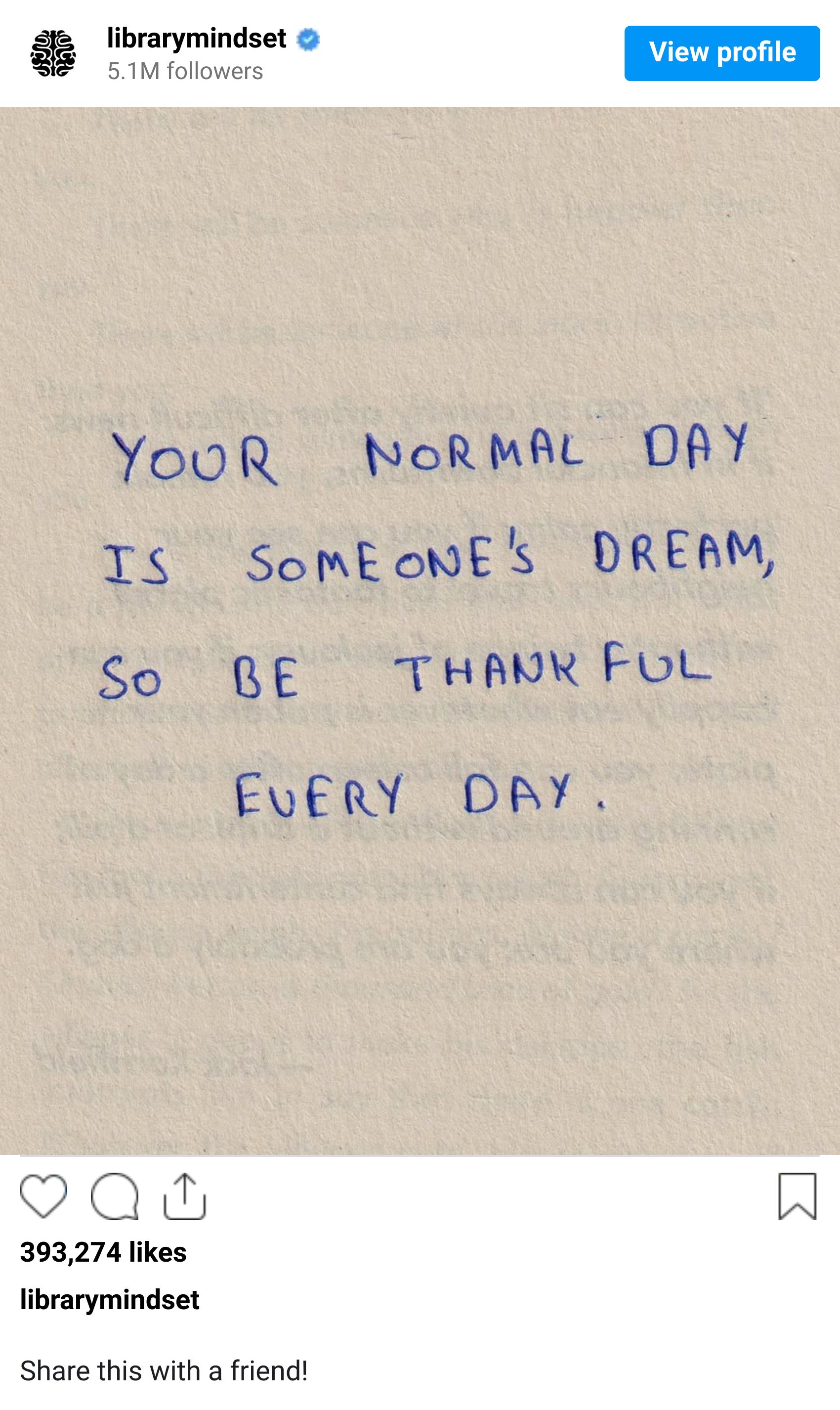
A MOMENT TO REFLECT
The most radical thing you can do in wellness right now is have a short supplement list and actually know why everything on it is there.
See you Wednesday!
Valerie
