
Sponsored by

Forwarded this by a friend? Subscribe here to join the community and never miss out!
Every June, the algorithm fills up with the same content. Yacht decks, Aperol spritzes in golden hour light, linen sets on cobblestone streets. Euro summer as a mood board.
What the content rarely shows is the actual practice underneath the aesthetic. The two-hour lunch with no agenda. The evening walk that has nowhere to be. The dinner that starts at 10pm because that is just when dinner starts.
I have lived in Madrid for four years now, and the thing that took the longest to unlearn was the idea that slowing down requires a destination. It does not. It requires a decision and a state of mind.
This week we are talking about how to actually live the European summer, not just the aesthetic.
OUR MAIN TOPIC

How to Actually Live the European Summer
Euro summer went viral for the aesthetics. The Amalfi Coast boat rides, the French Riviera terraces, the golden hour shots in Mykonos. The content is beautiful and it is also missing the point entirely.
The reason Southern Europeans look the way they do in summer, unhurried, present, genuinely at ease, is not because of where they are. It is because of how they have structured their relationship with time. And that is something you can actually import into your life regardless of whether you are in Ibiza or Indiana.
Here is what the mentality actually looks like in practice.
The Al Fresco Aperitivo: The Most Underrated Wellness Practice of the Summer
Every evening across Spain, Croatia, Greece, Italy, and France, something quietly radical happens. People stop working, leave their screens, and sit outside with a drink and something small to eat. Not to network. Not to be productive. Not even necessarily to have a deep conversation. Just to be outside, with other people, at the end of the day.
In Madrid this looks like a glass of chilled rosé or a tinto de verano on a terrace, olives and bread on the table, the evening light still warm at 9:30pm. It is not a happy hour. It is a ritual of transition, a deliberate signal that the workday is over and the evening belongs to you.
The wellness industry would sell you a wind-down supplement and a guided meditation for this. Southern Europe solved it with a piazza and a glass of something cold.
The practice worth importing: build a daily transition ritual that is tactile, social, and happens outside whenever possible. It does not have to involve alcohol. It has to involve stopping.
Golden Hour Strolls: Movement That Does Not Feel Like Exercise
One of the things that genuinely surprised me about living in Madrid is how much everyone walks. Not as exercise. Not as a step-count. Just as the natural way of moving through an evening.
The paseo, the evening stroll through the city, is a cultural institution across southern Europe. In Madrid the streets fill up after 8pm with people who have nowhere to be and are getting there slowly. It is movement that does not feel like a workout because it is not. It is just how the evening works.
Europe's notoriously late sunsets make this easy. In Madrid in June the sky is still pink at 10pm. The golden hour lasts for two hours. There is no urgency. The light keeps going and so do you.
The practice worth importing: one walk per evening with no destination, no podcast, no goal. The point is the wandering. Movement that is woven into life rather than scheduled into it looks completely different in the body than movement that is performed for health reasons. Both are valid. Only one feels like summer.
The Seaside Dip: Cold Water as a Daily Reset
Swimming in the Mediterranean is one of those experiences that sounds like a luxury until you have done it enough times that it becomes a habit. And then it becomes something you cannot imagine a summer without.
The water off the Amalfi Coast, in Mallorca, in Ibiza, in the Greek islands, is clear in a way that resets something in you. It is cold enough to be a genuine shock and warm enough to want to stay in. The combination is, as it turns out, exactly what the nervous system needs.
Cold water immersion does not require the Mediterranean. It requires access to water and the willingness to get in. A sea swim, a cold lake, a lido, an outdoor pool. The ritual of the daily dip is available almost everywhere. The mindset shift is choosing to treat it as a non-negotiable rather than a luxury.
The coastal seafood dinner that follows, fresh grilled octopus eaten at a table with sand still on your feet, is optional. Highly recommended, but optional.
The Long Lunch: Eating as an Event
The two-hour lunch is perhaps the most countercultural thing southern Europe does. Not because of what is eaten, though the food is extraordinary, but because of what the meal represents: time given over entirely to eating, talking, and being present with the people at the table.
In Spain this means the menu del dia. In Italy it means pasta followed by a secondo and no one checking their phone. In France it means a carafe of wine and the understanding that the table is yours for as long as you want it.
The food is part of it. Fresh seasonal produce, simply prepared. Grilled fish. A plate of jamón. Bread that is actually good. Olive oil poured generously over everything. The Mediterranean diet is not a diet. It is a philosophy about what food is for.
The practice worth importing: one meal per week that is an event rather than a task. Put it on the table, sit down, and do not look at your phone until it is over. Start with the good olive oil.
Euro summer went viral because it looks beautiful. It stuck because people recognized something in it they had been missing.
The aperitivo. The walk. The swim. The long lunch. None of it requires a flight to Positano or Mallorca. All of it requires the decision to treat your own life with the same unhurried attention that southern Europeans extend to theirs as a matter of course.
That is not an aesthetic. That is a practice, and it is available to you starting today.
OUR SPONSOR
10K Steps Is a Myth–Try This Instead

When motivation is lacking, jumping into heavy routines is the fastest way to burn out. That’s why millions of people are turning to walking as the foundation of their fitness journey.
Walking lets you enjoy the outdoors, clear your head, and practice mindfulness. It’s simple, sustainable, and can support lasting weight loss if you know how much you need. The “10,000 steps a day” rule is outdated; everyone’s lifestyle is different.
With Simple, you’ll get access to habit-based coaching that’s helped users lose over 18 million pounds. Take the quiz to discover your personalized walking target.
THE REWIND
Five things worth sitting with this weekend
🫒 Eat — Start with the olive oil. Genuinely good extra virgin olive oil, the kind that is peppery at the back of the throat, changes what every meal tastes like. Buy the best bottle you can find and use it on everything. It is the easiest entry point into the Mediterranean pantry.
🐟 Stock the pantry — The Mediterranean staples worth having on hand all summer: canned sardines in olive oil, anchovies in vinegar and olive oil, capers, good tinned mussels, and a jar of Castelvetrano olives. These are not ingredients. They are an aperitivo waiting to happen.
🌿 Eat seasonally — Figs start coming into season this month across southern Europe. Fresh figs with a little ricotta and honey, or sliced over burrata with prosciutto, is the most summer thing you can put on a table right now. Eat them while they are here.
👗 Wear linen — The Euro summer wardrobe is not complicated. Linen, loose, in neutrals. It is the only fabric that makes sense in 85-degree heat and somehow looks better slightly wrinkled. One good linen set is the most useful thing you can own this summer.
🚶 Walk somewhere tonight — No destination, no agenda, no podcast. Just the evening light and wherever your feet take you. Do it tonight and notice how different the evening feels when it has a walk in it.
WEEKLY THOUGHT
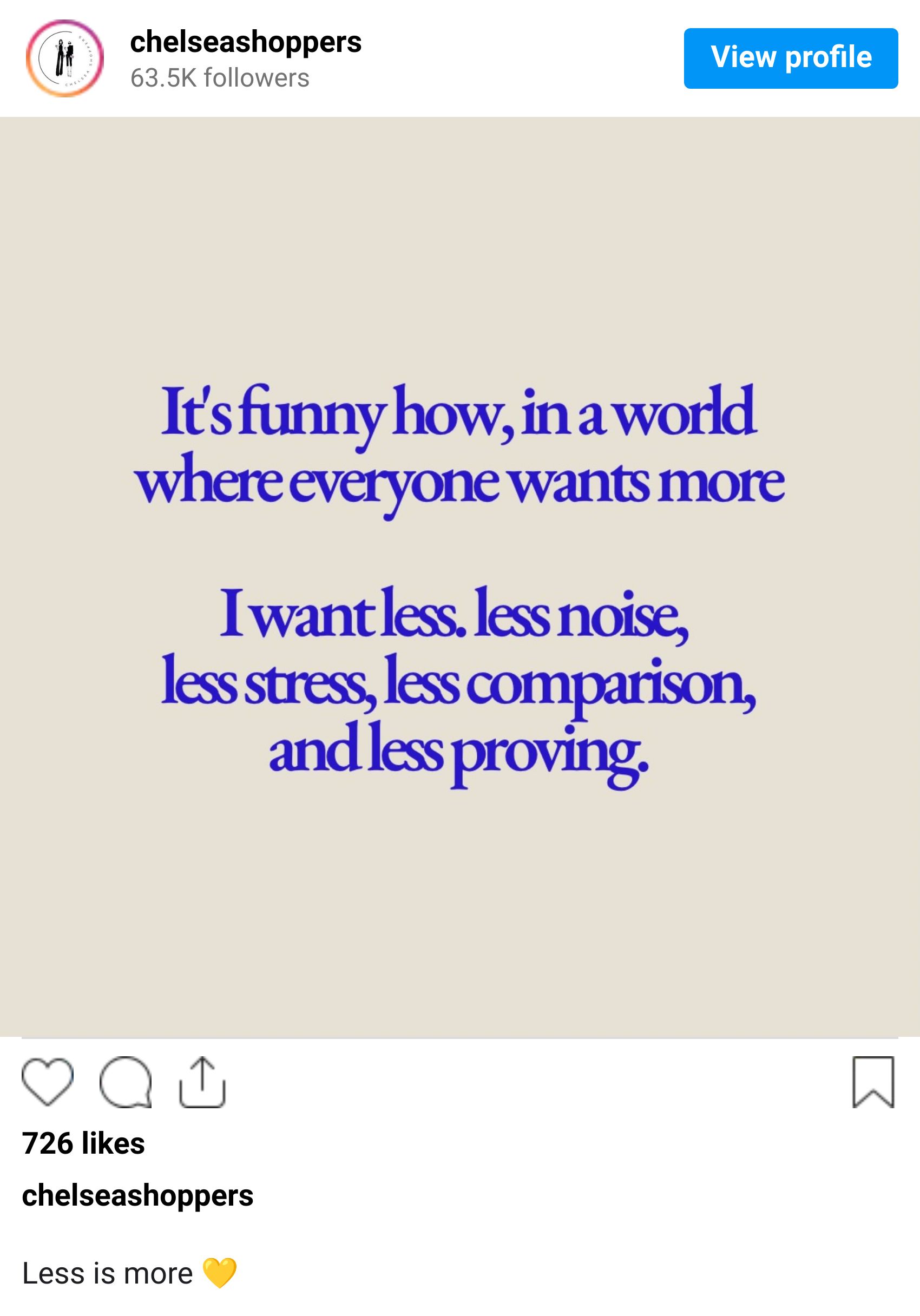
The Europeans did not discover slow living. They just never agreed to give it up.
See you Wednesday.
Valerie
